Showing posts with label library. Show all posts

Summer Reading Program

Do you read more when school is out? 

Maybe it's the long pool days or the slow pace I feel summer demands, but I have always read less in the summer. A shame, I know! But I "signed up" my daughter for our library's reading program, and we have been reading together every day. Probably, we would've read together every day anyway, but I get a silly satisfaction out of checking off another day. 

Our library's program requires reading for whatever amount of time you set for yourself, six days each week, and attending eight library activities (craft time, story time, or special events). At the end, finishers get a free book and a pool party! I'll admit: we'll never make eight activities in time. Luckily, A is too young to be disappointed.

Are you doing, or have you done, a summer reading program? Or, have you just made a standing date with your hammock and a stack of books?

I'm not convinced summer needs a lot of structure. But these program ideas look FUN:


A Rotating Home Library

Baby A's book display no longer fits all of her board books. Now, her books are rotated, just like her toys. Every Friday, I choose about twelve board books and two paper-page picture books for her book display, and the rest of the board books stay in her toy closet. (Paper-page picture books are kept on a bookshelf in the living room.) Based on the books we have and the developmental focus for Baby A, I created categories and I choose at least one book from each category each week. Books which Baby A shows strong interest in may get to stay on the shelf for more than a week. And obviously, books cross into several categories.
I currently have eight categories (in no particular order), and you can read the explanation of each if you're interested.

1. Counting/Colors: Some weeks we focus on practicing colors, and other weeks we practice counting to ten or other quantification skills. The books to serve this purpose are not necessarily counting nor color, but they are books that I know I can use to start conversations about these things. They're not always separate, either--Elmer's counting books have such vivid color blocks that we pause to talk about all of Elmer's colors, the blue birds, the purple fish, etc.
 

2. Vocabulary: Baby A has a few "dictionary" books, but other books are vocabulary-building with either a lot of pictures and details for elaboration, or with one word per page for a concentrated approach. My Little Word Book has a lot of pictures in categories like human body, farm animals, wild animals, toys, clothes, etc.


3. Animals: Baby A has many animal books, as I'm sure most toddlers have. Sometimes, we have one book on zoo animals and one on farm animals for a week. Or, we have three books on dogs one week, and one book on desert animals the next week. If you have a lot of books about vehicles, flowers, teddy bears, or whatever--they could be rotated in variety or in themes.


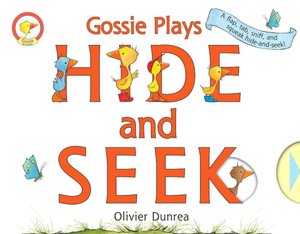
4. Lift-the-Flap/Interactive: These books feel like they are full of treasures and surprises, and build fine motor skills. They can be enjoyed at any age, but it is probably most exciting to see a toddler figure out how to manipulate the book independently. Baby A's first interactive book was Pat the Bunny, and I loved to see her peek at herself in the mirror or lift the cloth to find Paul when she was about 9 months old. Baby A, currently at 20 months, is very interested in flap-lifting, pop-up-pulling, sniffing, rubbing, and wheel-turning her books. All of these features (except pop-up) are in Gossie and Friends: Gossie Plays Hide and Seek, which also has a simple board game complete with character pieces in the back cover.

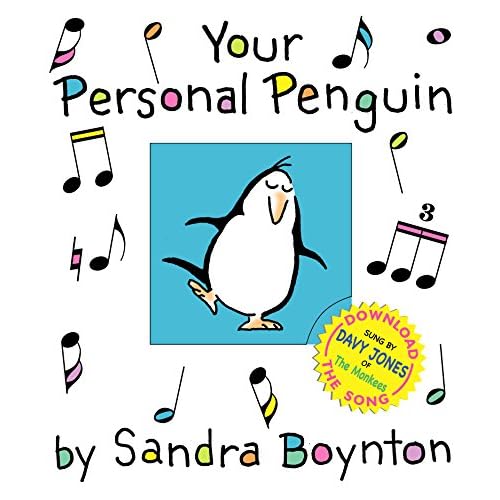
5. Affection: I like to keep handy books which give excuses for extra kisses and hugs and verbal affections. Even the tiniest readers feel bonded to and soothed by the tone, pace and voice inflection of their reading parents and caregivers. For example, my voice is enthusiastic and sweet while I read Your Personal Penguin, and soft and reassuring while I read I Love You As Much.

6. Poetry/Lyrical/Rhyming: A silly rhyme or a play on words is good for a laugh and for sound cognition. Toddlers practice speech by repeating fun words and phrases, and older children may want to memorize and recite favorite poetry.


7. Season/Holiday: Books don't necessarily have to be kept in their season of the year, but I definitely put books about holidays or weather and seasons or upcoming activities (like an airplane book before an airport trip, or potty book before potty training) in heavy rotation when they are most appropriate.


8. Paper-Page: Children who can read independently without the temptation to chew or tear may have mostly non-board books. But since we keep all of my paper picture books on a bookshelf in a living room which (mysteriously) does not particularly attract Baby A's attention, I choose two to go into her bedroom's book display. That way, I can be sure to read those to her. This category, and actually, each of the categories, will eventually evolve. Perhaps we'll eventually rotate early chapter books, or workbooks, or short story collections, or graphic novels.

If I had more wordless picture books, they would get their own category. Right now, Good Dog, Carl by Alexandra Day gets a lot of love.

As I choose books (pssst...contrary to the intensity of this list, it only takes me a minute) I also try to balance English-language and Finnish-language texts, as well as long-ish texts with shorter texts.

You could create your own categories based on the books in your home library or the books you check out from your public library and your little reader's needs and interests. You could also consider it through the lens of these Major Picture Book Categories. The purpose is to be intentional and quick in selecting a well-rounded collection of books. Some weeks, Baby A wants to read the same four books over and over for seven days straight. That's okay, too! But with fewer books to choose from, we usually end up reading all of 14-20 books, and before we tire of them, they're swapped out!

Books pictured:
Elmeri Ja Numerot by David McKee
My Little Word Book by Roger Priddy
I Howl, I Growl by Marcia Vaughn, illustrated by Polly Powell 
Your Personal Penguin by Sandra Boynton 
Jamberry by Bruce Degen
Bear Snores On by Karma Wilson, illustrated by Jane Chapman
Kaapo Kanin Känkkäränkkä [The Big Bad Mood] by M. Christina Butler, illustrated by Frank Endersby

Gosling Sighting and Thanksgiving Countdown

Celebrity news! 


I saw Gossie, the small, yellow gosling who likes to wear bright red boots! She trotted, cute as ever, in those boots on Halloween at her local library's activity stations--she and her friends met King Bear in a secret passage, fed wild animals a loofah snack, and had free reign of the puppet show theater.


Gossie handmade costume inspiration
I feel a little (a lot) behind sometimes (all the time), but somehow we have fun anyway. Did you realize there are only three weeks until the nationally scheduled day of lounging and over-eating!? I'd better get to the library to see if there are any Thanksgiving books left. I think I might skip the history and focus on the gratitude angle this year--what do you think? Any recommendations?
And I'm curious: do you have a polished silver or a plasticware kind of Thanksgiving table?

We Give Books

I just read three picture books online at We Give Books, and so three books were donated to Room to Read, a non-profit providing books to children in Zambia.
We Give Books donates a book for every book read! There are thousands of books to choose from. You choose a campaign to support, sign up with only your email or facebook (seriously, two seconds!) and get reading! You can even "bookmark" if you don't finish a book in one sitting. When the campaign you are supporting has reached its goal, you choose another campaign.

So far, I've read:
and

It's fun and the format is easy to read in and navigate around. You can search for a particular book or click on a keyword or a category to get suggestions. I'm using We Give Books at home, but schools (including homeschools) are supporting and benefiting from it, too. If I sound gushy, its because I'm SO excited to find a high-quality activity that supports children and literacy. Thanks, Jen of Chestnut Grove Academy, for telling me about it!

I hope you all take a look, spread the word, and enjoy it even half as much as I do.

Just curious, do you read online often?

P.S. We're carving our pumpkins tonight (finally!), and in case you didn't see it last week, we're using these free pumpkin stencils to support March of Dimes.

Young Adult Mermaid: Forbidden Sea

Because picture books are my current "specialty", we haven't really discussed much Young Adult literature. But these kids reading picture books start reading chapter books, and before we know it they're reading like adults. Young adults. A few months ago, I was at the Provo Library Children's Book Festival, and I had the great pleasure of talking with Sheila A. Nielsen, a librarian, illustrator, and author! She kindly gave me a signed copy of The Forbidden Sea, her first novel (I hope of many-to-be). I never have been particularly drawn to fantasy fiction, but I was drawn to this book and Sheila's beaming smile right away. Sheila explained that she wrote it to answer demand from girls visiting the Provo library for books about mermaids. 

Can you imagine, if you were one of those girls?  
You want a book with mermaids and a strong, interesting female lead? OK, I'll make you one. 

I was charmed by the action and mystery on the island of Windwaithe, and moved by the resiliency, loyalty, and independence of Adrianne, the main character. There was a side story romance, but--to my great relief--Adrianne was not rescued from conflict by a prince, nor a lover, nor her father. And the triumph of the book was in character growth, not boobs, not popularity. In short, if you're considering middle grade novels for anyone 10 or older (there are some scary parts and serious topics), read it! It will leave you wanting more stories about the fascinating characters, and more time under the sea (because this book is almost completely on land), so, fortunately, Sheila is working on a sequel. 

In the meantime, she compiled a handy list of mermaid books for all ages.

Have you read any YA fantasy lately? 

P.S. Pictures from the Provo Children's Book Festival (May 2011):
Sheila Nielsen and other author book signings! Free book! The Very Hungry Caterpillar! Illustrator artwork! Face painting! Crafts! Dance performances! Illustrator demonstrations! And there was more!

I support bookshelf entitlement.

"I would be most content if my children grew up to be the kind of people who think decorating consists mostly of building enough bookshelves."  
Anna Quindlen, "Enough Bookshelves," New York Times, 7 August 1991


I am about to make you very jealous.

My dad built this for the nursery:


Everyone should have a reading sanctuary, a library. In that house I dream of owning twenty years from now, there is a beautiful, sunny room with comfortable chairs and a fireplace, and the walls are lined from floor to ceiling with books.

But there will also be a rotating selection of picture books on this shelf that is so clean-lined and functional and beautiful, displaying books to entice readers...
You should get one, too,

like this double-sided book display case:

Early Childhood Resources ELR0335 Double Sided Book Display Stand

or like this Wild West revolving bookcase:

or you can use Ribba picture ledgers from Ikea:
 or make shelves like the Ikea ones, as I saw on this cool DIY blog.

Mine has nice bead board on the back, so I can have it in the middle of a room, or at the foot of a bed...I love it in the nursery reading nook, and I'll love it in my fantasy pre-school activity room.

Thanks, Pop. It is perfect.


Related Posts Plugin for WordPress, Blogger...