Showing posts with label picture books. Show all posts

Winter Gift Guide: Picture Books

Picture books are my go-to gift. Here are three ideas that follow the Read-Wear-Play magic formula.

18-months+:
 The Three Snow Bears by Jan Brett (a heartwarming Inuit variation of Goldilocks and the Three Bears; recently published in board book form)
Sea World Polar Bear Youth Slippers
Carter's Footed Pajama Blanket Sleeper 24 months- Polar Bear


Newly Literate+:

I Want My Hat Back by Jon Klassen (New York Times Best Illustrated Children's Book of 2011; 2012 Theodor Seuss Geisel Honor Book)
Melissa and Doug travel-size Flip-to-Win Memory Game (because in the book, the bear "remembers" and "forgets" the rabbit...)


Tween+ (including grown-up mid-century modern fans and Finlandophiles):

Moomin: The Complete Tove Jansson Comic Strip: Book 1 (the five books in this series contain comics originally published in London Evening News in the mid-1950s)
Moomin Character Earphone Jack Accessory
Marimekko Tuuli Canvas Pencil Pouch by hannasboutique (use it for pencils/pens, snacks, hygiene/grooming kit, etc.)


I should mention, I got the idea for Read-Wear-Play themed gifts from Gabrielle of Design Mom--Santa brings her six children using that formula. I should also mention that I collected these images and links for fun and for your friendly use, and I am not affiliated in any way with any of the products or sellers.

What's your gifting formula? What books are on your wish list, or gift list?

Mathematic Picture Books

Have you heard of Wumbers? Amy Krouse Rosenthal wrote, and Tom Lichtenheld illustrated, a punny book that will stretch your brain!


I've always liked number patterns and words, but when I thought I wasn't "good" at math in 5th grade, I threw myself into the world of words. Now, I don't think in terms of Numbers vs. Words, and I love to see adults and children nurture a love of both.

Here's a list of counting and other math books! And another extensive list of math-related picture books organized by subject!
And here's a list with descriptions of how to use picture books to teach math!

Happy weekend!

Timeless Summer Children's Books


 When I was a kid, there was no summer bucket list. 

If I was in Finland, I knew I'd be picking berries, visiting a cabin in the woods, and running back and forth between the sauna and the ocean. 

If I was in Virginia, I knew I'd be at the pool six days a week, riding my bike to my best friend's house, and devouring a million Otter Pops on my cousin's front porch.


Every summer also included a curl-up with a book in a backyard hammock.


All these summer joys are timeless, don't you think? Do you read in a hammock?

Try these classics to soak up one more month of summer:


Roxaboxen by Alice McLerran, illustrated by Barbara Cooney, is my favorite. McLerran and Cooney capture the magic of imagination that turns a field of broken glass and stones into a lifelong memory of a beautiful society of neighborhood friends.

 
Amos and Boris by William Steig was just published in 2009, but the enduring tale of friendship and simply sweet illustrations will make it a classic. 

The Wind in the Willows by Kenneth Grahames was written as a lovely escape from Grahame's difficult life, and it is now a gift of fantasy to everyone who reads each adventurous chapter.

 P.S. last year's summer book picks

first two photos: my childhood
third photo: source

Utah's Pioneer Day: Festival and Books

Today was Pioneer Day, the Utah state holiday.

Baby A and I hooked up the bike trailer and met some friends at a pioneer monument park turned festival. 

Baby A and I sat in a 1917 fire truck. The owner lent me his antique firefighter cap! Classic cars and fire trucks don't have much to do with Utah's history in particular, but Utah sneaks classic cars in to any summer festival. 


Utah's festivals aren't complete without some farm animals, either. The calf brayed (it hadn't mastered the moo) so loudly it frightened the young children.

The most relevant photo to Utah's history is of Baby A in a teepee. 


Not pictured: 12 craft stations, food stands, live bands on stage, pioneer museum, and a mass of face-painted children ushered through lines by their parents and grandparents. Oh, and posters with fun facts, like that Utah's state fish is the Bonneville Cutthroat Trout.

And here are a couple of fun books that celebrate Utah:


Dinosaur Mountain: Digging Into the Jurassic Age by Deborah Kogan Ray digs into the history of the "Bone Wars", and the monumental discovery of an enthusiastic paleontologist, Earl Douglass, in Utah's rocky northeast.


Good Night Our World series by Adam Gamble, illustrated by Anne Rosen is a great introduction to the highlights of the states. 
I think I'll get it as a keepsake for Baby A--she's been to all the places featured in the book!

Does your state or region have a holiday?

Summer Solstice Books + Activity Ideas

Summer Solstice feels magical, don't you think? As a child, I spent nearly every other summer in Finland, and on Juhannus [Midsummer's Eve] the sun really never set. At midnight, everything looks dusky, but not dark. Everyone stays up all night, celebrating with friends and family by visiting their summer cabin, grilling at a fire pit, going between the sauna and a swim in a river, drinking, dancing to a live band, and watching a huge bonfire float on the river. (Everyone does some of those things, at least!)


In Utah, we haven't done much to acknowledge Midsummer's Day, but this year, I'd like to do something fun. Do you celebrate the longest day of the year?

I checked out a couple of non-fiction picture books from the library for celebration inspiration.


The Summer Solstice by Ellen Jackson, illustrated by Jan Davey Ellis.


The Longest Day: Celebrating the Summer Solstice by Wendy Pfeffer, illustrated by Linda Bleck.

Each book explains the science of Summer Solstice, and the history and celebration of it around the world. The Summer Solstice is longer, with more challenging vocabulary, best for ages 7 and up. The Longest Day has 3-6 sentences per page, and seems best for ages 4 and up. Each book has several activity ideas in the back, all fun, educational, and inexpensive. 

In case you can't get the books in time for Midsummer's (Friday and Saturday!), I found some similar activities around the web:

flower crown wreath
sidewalk sundial
hot rock art

7 Books to Give a One-Year-Old

What do you give a one-year-old on her or his birthday? A book, of course!
These seven books are bound to become favorites for any tiny tot. They're just right for short attention spans and budding senses of humor, and they have room to grow with the lucky little sophomore.


We're Going On A Bear Hunt written by Michael Rosen, illustrated by Helen Oxenbury. This book can be read or sung; Oxenbury's timeless charm illustrating the delightful lyrics are a shot of sunshine.


Belly Button Book! by Sandra Boynton. One-year-olds often get excited about identifying a few body parts, and what's cuter than a toddler's belly button? Boynton is (always) hilarious, and the words transition well into play.


Yummy Yucky by Leslie Patricelli. As one-year-old diets (hopefully) expand, and mouthing (if you're lucky) begins to be the less-frequent form of object study, this book is a fun way to identify what's good to eat, and what to keep out of that curious mouth.


Is Your Mama a Llama? written by Deborah Guarino, illustrated by Steven Kellogg. This classic book explores animal mamas. One-year-olds are often just starting to look beyond their nucleus at the world, and this book reinforces categorization skills in a heartwarming, animal-focused form.


Dear Zoo by Rod Campbell. Doesn't it seem that going to the zoo is a rite of passage for the under-twos? There are zillions of zoo books, but this is an award-winning lift-the-flap book that will be reached for over and over again.


In the Town by Roger Priddy. Lift-the-flap books are exciting to one-year-olds practicing their fine motor skills. One-year-olds are busy building associations all day (and night), but this bright, real-world shadow book (or any of the others in the series) won't feel like work to anyone.


Sergio Makes a Splash! by Edel Rodriguez. All the exploration in the big, wide world can start to give famously bold one-year-olds a few fears. Sergio, an Argentinian penguin, is an endearing example of how to overcome fears and enjoy life, in cheerful, popping illustrations.

In case you missed it:
7+ books to give at a baby shower (or anytime!)


Living in a Picture Book

My mom was telling me about a book she read as a child, in which she pictured herself living. She can't remember the name of the book, but she remembers feeling right at home in that fantasy.
Have you ever imagined yourself living in a picture book? 


1. Angelina Ballerina (toy house) [illustrated by Helen Craig, written by Katharine Holabird]
2. Cat in the Hat crashes that house [by Dr. Seuss]
3. Peter Rabbit's tree burrow [based on original by Beatrix Potter]
4. Fancy Nancy house [illustrated by Robin Preiss Glasser, written by Robin Preiss Glasser]
5. Curious George's urban balcony (picture from the TV show) [PBS show based on books by H.A. and Margaret Rey]

I'm partial to Curious George's lifestyle--an apartment in the city and a monthly weekend stay in the country.

Do you live in any spaces inspired by book illustrators or authors? I'd love to take a peek!


How to Pack Books for a Temporary Move

Our new home is a summer sub-lease, and we're not sure where we'll be in the fall. This made packing extra tricky, but I was glad for the chance to go through all of my books.


I knew I wanted Baby A to have access to a lot of picture and board books, but we have enough to fill her bookshelf five times (I keep them in a closet for rotation), and storage space at the summer apartment is limited. I had to choose carefully what to bring along.


If you ever find yourself in a temporary move or extended vacation, here's a smart way to pack up your books:

1. Figure out how many books you would like to bring with you. If you are on an extended vacation, consider the weight they will add to a suitcase, and how quickly you or your child may tire of the book.

2. Sort all books by season. Make separate piles for summer, fall, winter, spring, and all/no specific season. Seasonal books were not restricted to holiday or with a season theme--any books with storylines specific to a time of year were placed in the appropriate pile. Ex: Jamberry by Bruce Degen is a picture book poem about berries, inspired by Degen's berry-picking childhood summers, so it was placed in the summer pile. The all/no specific season will most likely be much larger than the rest, so you may want to break it into sub-categories, such as animals, bedtime, counting/colors/shapes, etc.

3. Choose books from the all/no specific season pile that you'd like to bring with you. Combine those with the books from the season most appropriate to your new home. Add or take away from the pile based on the number (or poundage) of books you've decided to bring with you.

4. Prepare the boxes. If using a cardboard box (I prefer diaper boxes for books), tape the bottom of the box with three slightly overlapping strips of tape along the bottom and halfway up each side. Line the bottom of the box or the entire box with plastic bags, or stack the books in plastic grocery bags before putting them into the box. Top the box with a plastic bag, as well. This will help protect them from water and dust. 

If you are packing books into a suitcase, line underclothes/socks along the bottom of the suitcase, and pack books on top of them. Try to create a flat surface. Keep lightweight and activity books in your carry-on bag.

5. Pack up the books: 10-20 pounds of books in each box, with a detailed label of what kind of books are in each box. Cover the label in tape so that it does not smear. Color-code the box(es) going with you with duct tape so that they are easy to spot should they become mixed with storage boxes.


Luckily, we are storing the books we did not bring with us at my parents' house, so Baby A will still enjoy them whenever we visit them.

I also happened to score this little cardboard display shelf at my recycling center! Now Baby A's books can be rotated between her bookshelf and this (which is tucked out of sight) to keep her books exciting this summer.


Do you sort your books by season? Do you have any book-packing tips?


Baby Shower: Books for Babies and Parents

If you know someone who is having a baby this summer (two of my sisters-in-law are having girls!), here are seven (okay, twelve) books sure to be treasured by baby and parents.


Duck and Goose by Tad Hills. There are lots of Duck and Goose books, but in this original, Duck and Goose have rivaling ideas of what is best to do with the egg they find together. In the end a surprise leaves them both happy. It is a subtle reminder not to sweat the small stuff and to stay on the same team in parenting, although the book is about the silly adventures of two friends. 


Seven Hungry Babies written by Candace Fleming, pictures by Eugene Yelchin. This tale of a nearly indefatigable mama bird feeding her chicks one by one is lyrical, funny, and relatable. This book would be especially appreciated by a mom of multiples or subsequent children, though I appreciated it when my mom gave it to me while I was pregnant with my first (and only).


Goodnight Moon by Margaret Wise Brown, pictures by Clement Hurd. I almost didn't include this because it's on every list out there, but I couldn't help myself, because it was the first book I bought Baby A while I was expecting her. The soft rhymes are soothing to newborns, and really, to anyone. It's nearly impossible to read it without lowering your voice, slowing down, and feeling calm. Buy it from a bookstore nearby, with the receipt taped inside, so that if they get a duplicate you can exchange it for another book on their list (or this list).


Pat the Bunny by Dorothy Kunhardt. Another obvious choice, I know! This makes a great first interactive book, because there aren't parts that tear off, and it has a little mirror. If you'd like to spice it up, go for Pat the Cat or Pat the Puppy by Edith Kunhardt. My copy did not hold up very well (the pages tear away from the binding and the ribbon comes right off the bunny). Although it is a board book, it is a thinner cardboard than other board books, so it will not withstand any mouthing. But because it is so beloved, it is always in stock--so, easily replaced. Another fun texture book: Tails by Matthew Van Fleet.


My Animals by Xavier Deneux. The simple white-on-black illustrations are visually stimulating, particularly for newborns, but have details for older babies. Also: the Elmer books by David McKee are like a visual festival for newborns. 


The Very Hungry Caterpillar by Eric Carle. This book truly grows with the young reader, and is educational for newborns and first graders alike. Baby A and I enjoy this book in the oversized board book version. If the parents already have this Eric Carle book, go for the less popular, but also beautiful Mister Seahorse or The Tiny Seed.


Winnie the Pooh by A.A. Milne, illustrated by E.H. Shepard. There is a reason this book first published eighty-six years ago is enduring--it is as touching and relatable now as it was then. It is a chapter book, but it is never too soon to collect classics for a nursery.


What would you add to this list? Do the soon-to-be-parents you know register for books?


Three Picture Books to Welcome Spring

Spring is only two weeks away! I feel refreshed just perusing the soft, but bursting images of picture books about springtime, especially when they are crafted with the grace of a cherry blossom, like these:

Snow Rabbit, Spring Rabbit: A Book of Changing Seasons (in the UK as Brrrr: A Book of Winter) by Il Sung Na. A whimsy-laced but careful intention floods all of Na's art. I love The Thingamabob, but it's almost as if Na's signature speckle and swirl watercolor details were destined for the nature elements explored in this book.


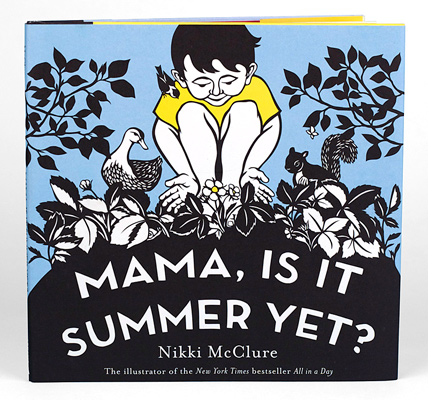
Mama, Is It Summer Yet? by Nicole McClure. This book stretches through the changes and wonder of spring into summer. See more and learn more here, and read an interview that coincidentally lit up my Google Reader today.
I feel personally drawn to this book because Baby A has been asking to go swimming for weeks (she's a summer girl like me!) but I keep having to remind her that it is still winter. Now I can use this gorgeous book to find the images and words I'm searching for to explain the cues in nature for the coming of spring, and then summer on its heels.


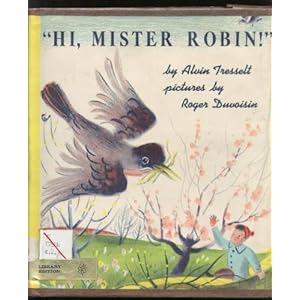
Hi, Mr. Robin! by Alvin Tresselt, pictures by Roger Duvoisin. A beaut' first published in 1950, this stole my heart with its sweet text encapsulating a child's budding patience and eagerness for spring, and its classic, lively illustrations. It would be lovely to hear it read aloud by a Level 1-2 reader (in the most common edition it's 28 pages, with about half of those pages filled with medium-sized text).


I hope you'll soon be reading one of these with a child or with your inner child. 

P.S. Remember how blessed you are to be empowered by literacy on World Read Aloud Day, (tomorrow) March 7th!


Children's Books Into Movies

Will you be seeing The Lorax this weekend?


If you watched the Oscars on Sunday, you probably noticed how many great films were inspired by books written for or about children. This year's nominees included:
The Adventures of Tintin
War Horse
Harry Potter and the Deathly Hollows: Part 2
Hugo (based on The Invention of Hugo Cabret, won five Oscars)
Puss In Boots (based on the character from Shrek, but the character is inspired by the fairytale)

You can peruse lists of more picture books/children's books that have been made into movies here and here. 

There are also books based on every children's movie and television series that I can think of--but would you agree that the books intended to be books are almost always better in quality (of illustration and text) than the books made for fans of the movies/shows that inspired them? Screenplays are often so beautifully written, and are, in my opinion, like long and elaborate moving picture books with music. But something about the quick adaptations from screen to picture book often seems cheap. Do you have thoughts on why?

P.S. I'm excited to see The Secret World of Arrietty (based on The Borrowers), currently in theaters!

Fat Tuesday & Sledding Day Books

my laskiaispullat aka shrove buns


Happy Fat Tuesday and Laskiaistiistai [Sledding Day]! Since the observation of Lent isn't very common in Finland, Fat Tuesday became a day where all the children have the day off from school and go sledding, then go home to pea soup and sweet rolls with whipped cream and jam or hazelnut spread called laskiaispullat. So whether you're sledding or working up a New Orleans fever (or both!), here are two picture books it's not too late to enjoy:


Just-published (2012) Dinosaur Mardi Gras by Dianne de las Casas, illustrated by Marita Gentry, has Rex, king of Mardi Gras, as the star of this dinosaur spin on the musical fun. Here's the book trailer. 


Red Sled by Lita Judge is also new (2011), but it is sure to become a classic. Lovely illustrations (like the one above) and few words tell a story of curiosity.


P.S. Leave a comment if you'd like me to send you the laskiaispulla recipe. It will change your life.


Pre-Literacy: Vocabulary

One of the best ways to build and maintain vocabulary is to read, right? But what about before you know how to read?

What's the best way to build a baby's (or anyone's) vocabulary?

Talk! Talk about what you're doing. Let's unsnap your pajamas. And pull out your arm. Oh, good stretch! And your other arm. And wiggle those legs right out. I found your toes! Ooo, do you feel cold? It's cold without clothes! All the live-long day, talk talk talk.

And listen! Try not to interrupt your baby's babble. Look them in the eye as often as possible when they grunt or babble. When they pause, respond to what you imagine they're saying. Every baby finds their own rhythm of conversation. When Baby A was only a few months old, I had to interrupt her babble with Ahaa or Niin every ten seconds, or else she would stop. I guess she didn't want to waste her breath if she thought I wasn't following.

When they attempt to say words, validate and repeat the word after they've said it. Example: Baby: [pointing to a ball] Ba! Adult: Ball! [offering the ball] Would you like to hold the ball? This corrects or reinforces correct speech in an empowering way. Avoid "baby talk", as it confuses, and avoid negativity about or scolding for incorrect or delayed speech.

When reading, point to the pictures while you are talking about them. This is particularly easy in picture books with simple plots. 

 
I've always pointed to the telephone, red balloon, bears, chairs, etc. in Goodnight Moon. Ask toddlers to point, such as Where is the red balloon? Ask questions about the pictures, Have the kittens stop playing with the string?

P.S. A bedroom inspired by Clement Hurd's great green room.


P.P.S. Mo Willems' Listen to My Trumpet publishes TODAY! Mo says, "Piggie can't wait to play her new instrument for Gerald! But is she ready to listen to his reaction?" You can run out and be the first of your friends to snag it. Except you won't beat me to the bookstore.


Valentine Picture Books Hot Off the Press

Six more weeks of winter. Oi! But February does have that light-at-the-end-of-the-tunnel feeling, and splashes of pink and red everywhere!

Even though I like pink, I've always thought Valentine's Day was silly, what with all the sexism. But maybe my true reason for resistance is because there isn't Valentine-y food to win me over?...unless red velvet cupcakes are officially adopted as Valentine cupcakes.


I cut hearts from layered scrapbook paper and strung them on little hooks across the mirror above my mantle, so I guess that means I'm on the Valentine cheer team this year. That "You've got me hooked" Heart String (I just made that up!) is not a fun activity idea for toddlers, by the way. I don't know if I waited too long or not long enough to introduce paste, but Baby A would not stop rubbing it on her face, deeply convinced that it was lotion.

But whatever your stance Valentine's Day, you won't be able to resist smiling at these new, sweet picture books.

For Anyone/Everyone:

Plant a Kiss (December 2011) written by Amy Krouse Rosenthal, illustrated bv Peter H. Reynolds. See the beauty and power of one kiss, planted with love and patience. 


Love Is You and Me (December 2011) by Monica Sheehan. Love is defined, not only in cuddles or elaborate outings, but in daily kindness, as illustrated by this bright book. Also by Sheehan: Be Happy!


For Sweethearts:

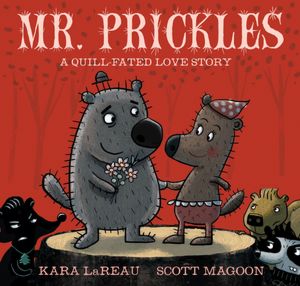
Mr. Prickles: A Quill-Fated Love Story (December 2011) by Kara LaReau, illustrated by Scott Magoon. A rejected porcupine loner finds love at last. It reminds me of this relationship graph I saw at Cup of Jo, by GraphJam. Don't be frightened of those glaring woodland creatures--Mr. Prickles' story has a feel-good conclusion.


Snowy Valentine (November 2011) by David Petersen. This bunny husband makes you say awwww. On a quest for advice on a good gift for his wife, he inadvertently creates a perfect token of his love. This is David Petersen's first picture book, and I look forward to more in the future.


P.S. Last year's February, and last year's valentine.

P.P.S. I liked these ideas for using conversation hearts, especially using them for practice writing sentences, and as BINGO markers. If you ask me, conversation hearts are super entertaining, but not delicious.

A Rotating Home Library

Baby A's book display no longer fits all of her board books. Now, her books are rotated, just like her toys. Every Friday, I choose about twelve board books and two paper-page picture books for her book display, and the rest of the board books stay in her toy closet. (Paper-page picture books are kept on a bookshelf in the living room.) Based on the books we have and the developmental focus for Baby A, I created categories and I choose at least one book from each category each week. Books which Baby A shows strong interest in may get to stay on the shelf for more than a week. And obviously, books cross into several categories.
I currently have eight categories (in no particular order), and you can read the explanation of each if you're interested.

1. Counting/Colors: Some weeks we focus on practicing colors, and other weeks we practice counting to ten or other quantification skills. The books to serve this purpose are not necessarily counting nor color, but they are books that I know I can use to start conversations about these things. They're not always separate, either--Elmer's counting books have such vivid color blocks that we pause to talk about all of Elmer's colors, the blue birds, the purple fish, etc.
 

2. Vocabulary: Baby A has a few "dictionary" books, but other books are vocabulary-building with either a lot of pictures and details for elaboration, or with one word per page for a concentrated approach. My Little Word Book has a lot of pictures in categories like human body, farm animals, wild animals, toys, clothes, etc.


3. Animals: Baby A has many animal books, as I'm sure most toddlers have. Sometimes, we have one book on zoo animals and one on farm animals for a week. Or, we have three books on dogs one week, and one book on desert animals the next week. If you have a lot of books about vehicles, flowers, teddy bears, or whatever--they could be rotated in variety or in themes.


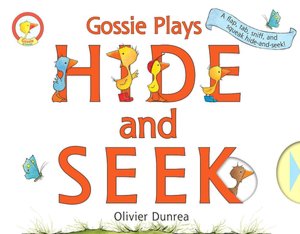
4. Lift-the-Flap/Interactive: These books feel like they are full of treasures and surprises, and build fine motor skills. They can be enjoyed at any age, but it is probably most exciting to see a toddler figure out how to manipulate the book independently. Baby A's first interactive book was Pat the Bunny, and I loved to see her peek at herself in the mirror or lift the cloth to find Paul when she was about 9 months old. Baby A, currently at 20 months, is very interested in flap-lifting, pop-up-pulling, sniffing, rubbing, and wheel-turning her books. All of these features (except pop-up) are in Gossie and Friends: Gossie Plays Hide and Seek, which also has a simple board game complete with character pieces in the back cover.

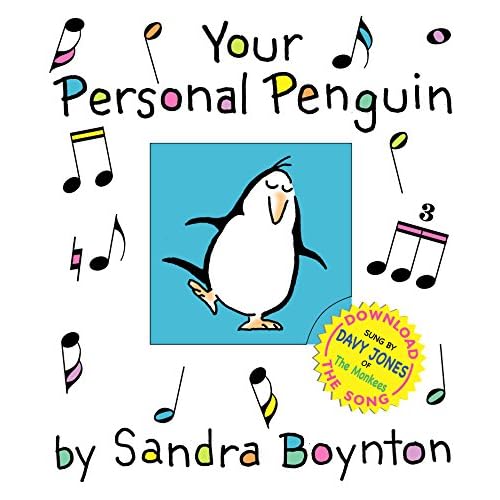
5. Affection: I like to keep handy books which give excuses for extra kisses and hugs and verbal affections. Even the tiniest readers feel bonded to and soothed by the tone, pace and voice inflection of their reading parents and caregivers. For example, my voice is enthusiastic and sweet while I read Your Personal Penguin, and soft and reassuring while I read I Love You As Much.

6. Poetry/Lyrical/Rhyming: A silly rhyme or a play on words is good for a laugh and for sound cognition. Toddlers practice speech by repeating fun words and phrases, and older children may want to memorize and recite favorite poetry.


7. Season/Holiday: Books don't necessarily have to be kept in their season of the year, but I definitely put books about holidays or weather and seasons or upcoming activities (like an airplane book before an airport trip, or potty book before potty training) in heavy rotation when they are most appropriate.


8. Paper-Page: Children who can read independently without the temptation to chew or tear may have mostly non-board books. But since we keep all of my paper picture books on a bookshelf in a living room which (mysteriously) does not particularly attract Baby A's attention, I choose two to go into her bedroom's book display. That way, I can be sure to read those to her. This category, and actually, each of the categories, will eventually evolve. Perhaps we'll eventually rotate early chapter books, or workbooks, or short story collections, or graphic novels.

If I had more wordless picture books, they would get their own category. Right now, Good Dog, Carl by Alexandra Day gets a lot of love.

As I choose books (pssst...contrary to the intensity of this list, it only takes me a minute) I also try to balance English-language and Finnish-language texts, as well as long-ish texts with shorter texts.

You could create your own categories based on the books in your home library or the books you check out from your public library and your little reader's needs and interests. You could also consider it through the lens of these Major Picture Book Categories. The purpose is to be intentional and quick in selecting a well-rounded collection of books. Some weeks, Baby A wants to read the same four books over and over for seven days straight. That's okay, too! But with fewer books to choose from, we usually end up reading all of 14-20 books, and before we tire of them, they're swapped out!

Books pictured:
Elmeri Ja Numerot by David McKee
My Little Word Book by Roger Priddy
I Howl, I Growl by Marcia Vaughn, illustrated by Polly Powell 
Your Personal Penguin by Sandra Boynton 
Jamberry by Bruce Degen
Bear Snores On by Karma Wilson, illustrated by Jane Chapman
Kaapo Kanin Känkkäränkkä [The Big Bad Mood] by M. Christina Butler, illustrated by Frank Endersby

Related Posts Plugin for WordPress, Blogger...