A Rotating Home Library

Baby A's book display no longer fits all of her board books. Now, her books are rotated, just like her toys. Every Friday, I choose about twelve board books and two paper-page picture books for her book display, and the rest of the board books stay in her toy closet. (Paper-page picture books are kept on a bookshelf in the living room.) Based on the books we have and the developmental focus for Baby A, I created categories and I choose at least one book from each category each week. Books which Baby A shows strong interest in may get to stay on the shelf for more than a week. And obviously, books cross into several categories.
I currently have eight categories (in no particular order), and you can read the explanation of each if you're interested.

1. Counting/Colors: Some weeks we focus on practicing colors, and other weeks we practice counting to ten or other quantification skills. The books to serve this purpose are not necessarily counting nor color, but they are books that I know I can use to start conversations about these things. They're not always separate, either--Elmer's counting books have such vivid color blocks that we pause to talk about all of Elmer's colors, the blue birds, the purple fish, etc.
 

2. Vocabulary: Baby A has a few "dictionary" books, but other books are vocabulary-building with either a lot of pictures and details for elaboration, or with one word per page for a concentrated approach. My Little Word Book has a lot of pictures in categories like human body, farm animals, wild animals, toys, clothes, etc.


3. Animals: Baby A has many animal books, as I'm sure most toddlers have. Sometimes, we have one book on zoo animals and one on farm animals for a week. Or, we have three books on dogs one week, and one book on desert animals the next week. If you have a lot of books about vehicles, flowers, teddy bears, or whatever--they could be rotated in variety or in themes.
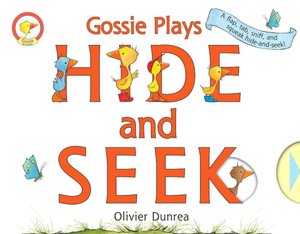


4. Lift-the-Flap/Interactive: These books feel like they are full of treasures and surprises, and build fine motor skills. They can be enjoyed at any age, but it is probably most exciting to see a toddler figure out how to manipulate the book independently. Baby A's first interactive book was Pat the Bunny, and I loved to see her peek at herself in the mirror or lift the cloth to find Paul when she was about 9 months old. Baby A, currently at 20 months, is very interested in flap-lifting, pop-up-pulling, sniffing, rubbing, and wheel-turning her books. All of these features (except pop-up) are in Gossie and Friends: Gossie Plays Hide and Seek, which also has a simple board game complete with character pieces in the back cover.
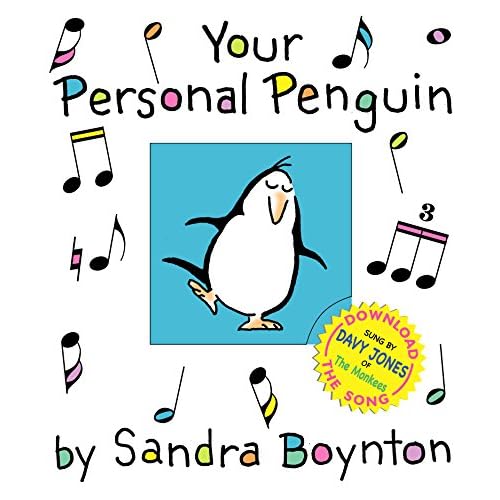
5. Affection: I like to keep handy books which give excuses for extra kisses and hugs and verbal affections. Even the tiniest readers feel bonded to and soothed by the tone, pace and voice inflection of their reading parents and caregivers. For example, my voice is enthusiastic and sweet while I read Your Personal Penguin, and soft and reassuring while I read I Love You As Much.

6. Poetry/Lyrical/Rhyming: A silly rhyme or a play on words is good for a laugh and for sound cognition. Toddlers practice speech by repeating fun words and phrases, and older children may want to memorize and recite favorite poetry.


7. Season/Holiday: Books don't necessarily have to be kept in their season of the year, but I definitely put books about holidays or weather and seasons or upcoming activities (like an airplane book before an airport trip, or potty book before potty training) in heavy rotation when they are most appropriate.


8. Paper-Page: Children who can read independently without the temptation to chew or tear may have mostly non-board books. But since we keep all of my paper picture books on a bookshelf in a living room which (mysteriously) does not particularly attract Baby A's attention, I choose two to go into her bedroom's book display. That way, I can be sure to read those to her. This category, and actually, each of the categories, will eventually evolve. Perhaps we'll eventually rotate early chapter books, or workbooks, or short story collections, or graphic novels.

If I had more wordless picture books, they would get their own category. Right now, Good Dog, Carl by Alexandra Day gets a lot of love.

As I choose books (pssst...contrary to the intensity of this list, it only takes me a minute) I also try to balance English-language and Finnish-language texts, as well as long-ish texts with shorter texts.

You could create your own categories based on the books in your home library or the books you check out from your public library and your little reader's needs and interests. You could also consider it through the lens of these Major Picture Book Categories. The purpose is to be intentional and quick in selecting a well-rounded collection of books. Some weeks, Baby A wants to read the same four books over and over for seven days straight. That's okay, too! But with fewer books to choose from, we usually end up reading all of 14-20 books, and before we tire of them, they're swapped out!

Books pictured:
Elmeri Ja Numerot by David McKee
My Little Word Book by Roger Priddy
I Howl, I Growl by Marcia Vaughn, illustrated by Polly Powell 
Your Personal Penguin by Sandra Boynton 
Jamberry by Bruce Degen
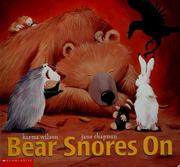
Bear Snores On by Karma Wilson, illustrated by Jane Chapman
Kaapo Kanin Känkkäränkkä [The Big Bad Mood] by M. Christina Butler, illustrated by Frank Endersby

Reading on Groundhog Day

Are you counting down to Groundhog Day? It's just around the corner on Thursday, February 2nd! 
We've had an unusually mild winter--rain in January is ridiculous. I'm wondering, does that mean we'll get an early spring, or that winter will be jealous and ice us over until June?

We'll just have to see what the groundhog says!

Groundhog Day has been a celebrated holiday (seriously) by both my family and my husband's family since forever. It's kind of romantic to continue the tradition together. This year, I gave both sets of our parents this funny picture book:


Geoffrey Groundhog Predicts the Weather by Bruce Koscielniak,

and I gave my niece this Level 1 for her to read all by herself:


Groundhog Day by Margaret McNamara, illustrated by Mike Gordon.

Cross your fingers for no shadow!


P.S. 10 Top Children's Books from 2011, according to Amazon. I'm ashamed to say I haven't read most of them, but they look great... I'll get back to you!

Year of the Dragon: Book, Song, Craft

Gung Hay Fat Choy!
Happy Chinese New Year!
And here's a song for storytime, or just because.
Check out these engaging picture books to ring in the Year of the Dragon.

For toddlers:

Bringing in the New Year by Grace Lin. Lin has written several books about a Chinese-American family based on her own childhood.

For pre-school:
My First Chinese New Year by Karen Katz. The fun anticipation and celebration of Chinese New Year traditions are shown as a little girl prepares with her family.

For history:

The Great Race: The Story of the Chinese Zodiac by Dawn Casey, illustrated by Anne Wilson. Better for ages 5 and up, this retells the story of how the Chinese Zodiac calendar was made, thirteen animals racing to for the honor of being first. Friendship and betrayal deepen the meaning behind this exciting tale.

For the beautiful dragon:

The Dancing Dragon by Marcia K. Vaughan, illustrated by Stanley Wong Hoo Foon. These gorgeous illustrations capture the beauty of the new year parade, with an 8-page diorama of the dancing dragon.

We're having a Chinese-ish dinner, and making lanterns and fans tonight. Really, we should've had new year's eve dinner last night, with long noodles and other lucky foods, but clementines and stir-fry rice tonight will have to do.

Here's to a prosperous 2012!

When My Baby Dreams


Have you checked out one of last year's internet sensations, Mila's Daydreams? Adele Enersen, formerly in advertising, started photographing her baby while on her maternity leave. (She's from Finland [cheer], and so it's possible her maternity leave is up to three years. I didn't ask her.) The photographs were made into a book, When My Baby Dreams, and I couldn't help but order it. It's like taking the sweetness of watching a baby sleep and the softness of happy daydreams and putting them into big pictures to flip through whenever you need an endorphin rush. Now, Adele's expecting her second baby, and her second book, (fairytales), is due next winter! You can see her talk about it on the Today Show.


Porcupines Are the New Owls

I declared porcupines as the new owls after a visit to Barnes & Noble last week. My husband looked at me blankly. So, I thought I'd tell someone who knew. You know, right?

Just look at the last couple of years:


How Do You Hug a Porcupine?, words by Laurie Isop, illustrated by Gwen Millward (July 2011)
Valentine the Porcupine Dances Funny, words by Derrick Brown, illustrated by Jennifer  Lewis (October 2010)
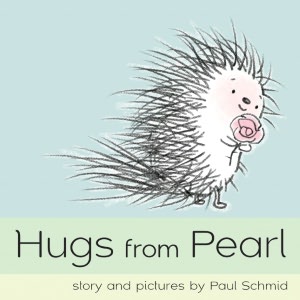
Hugs from Pearl by Paul Schmid (November 2011)
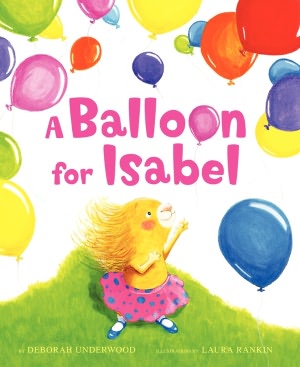
A Ballon for Isabel, words by Deborah Underwood, illustrations by Laura Rankin (April 2010)
Polly Porcupine's Painting Prizes by Barbara deRubertis (January 2011) 
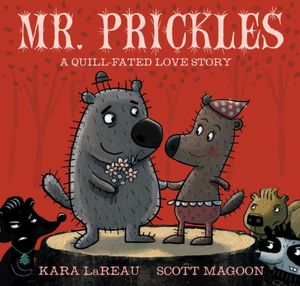
Mr. Prickles: A Quill-Fated Love Story, words by Kara LeReau, pictures by Scott Magoon (December 2011)

But I guess people have liked porcupine books for children to some degree for a long time. 

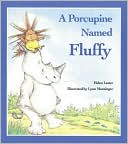
A Porcupine Named Fluffy, words by Helen Lester, illustrated by Lynn Munsinger (1989)


Are you in to the prickly cuties? Are there any book trends you're on to/in to?


One Love

Continuing the topic of love and solidarity, have you seen the picture book adapted by Bob Marley's youngest daughter, Cedella Marley, illustrated by Vanessa Brantley Newton? It was just published in September 2011.
One Love is a heartfelt tribute, and the illustrations convey a fun sense of community. I know you're singing "One Love". Here's the song

Teaching My Baby About Civil Rights

"I have a dream that one day my four little children will one day live in a nation where they will not be judged by the color of their skin but by the content of their character." -MLKJ

Happy Martin Luther King, Jr. Day! 
(Or, as I was taught in my Virginia elementary school: Lee-Jackson-King Day: the day of civil rights and states' rights activists; many important people were born in January.)

Here's a neat biography of Martin Luther King, Jr., designed for children.

And I think I'll play this video for Baby A:


She won't quite grasp it yet. How could she? The sad part of talking to your kids about tolerance and peace and freedom is introducing to them the reality that not everyone is tolerant, nor peace-building, nor free. But we can and must teach our children to walk hand in hand, to sing together, and to reach out to the oppressed.

There's an interesting perspective on talking to kids about race and a fascinating conversation-starting picture book suggestion here

What are you telling the children in your life about civil rights advocacy?

Children's Magazines: Outside the USA

image source
Speaking of magazines, have you heard of BIG Kids Magazine?
They're in Australia, so I can't afford the shipping, but I follow their blog. Little kids and grown-up kids work together to tell stories with art and words. BIG stands for Bravery/Imagination/Generosity. It's such an inspiring place to visit on an internet journey. Don't you love it when a little piece of imagination is published? And when the art of the youngest is validated and empowered alongside the art of those with more years of experience?

BIG's current project is to gather submissions for interpretations on map-making. I'm spinning around my idea of treasure and maps, and even if I don't make the submission deadline, I'd like to create something with Baby A. BIG gives lots of IDEAS

Oh, and while I'm mentioning magazines outside the U.S., here's a post by Design Mom about an adorable French children's online magazine, and here's a post by Apartment Therapy about (also French) MilK magazine. Do you know of any great children's magazines outside the U.S.?

Braille Literacy

Have you ever read braille? On a tour of a printing house, I got a card with misprinted braille. I looked at the raised dots, and then felt them with my pointer finger. I could only tell it felt bumpy; I couldn't even detect if there were one or three bumps in a line. 

Braille has been used since Louis Braille invented it in 1821; it is a genius system. I would say it is one of the most important advances in the history of literacy. Helen Keller said, in a speech honoring the 100th anniversary of his death, "we, the blind, are as indebted to Louis Braille as mankind is to Gutenberg." Of course, not only those who read braille benefit from it. Imagine if braille did not exist, how the educations and contributions to society of the millions of people with blindness could have been obstructed?

January is Braille Literacy Month.
Celebrate by:
learning more about Louis Braille
writing and/or reading your own name or a word in braille.

Can you read the word at the top of this post? How about if you "embossed" it by poking a pin through card stock?

Magazines for Children

The magazines I read are a mash-up of thinly veiled and not-at-all veiled advertisements, plus targeted journalism and research presentation, in the form of deeply relevant socio-economical topics, awareness, or quick tips. I realize they're mostly silly, but I'm a hold-out enthusiast for magazines when it comes to short, casual reads on the couch or in the car. 

Children's magazines are silly in the good way. They have targeted educational articles, plus fun activity pages or ideas, and they usually don't have ads! There is a reason doctors offices stock Hilights. Magazines provide a fresh load of information and activities, which can be tossed into the recycling bin after use. They're great to have on hand during times which require quiet and/or patient waiting from children, (think: church, the post office line, longer car rides, or dull shopping trips).
Here's an index of 60 children's magazines in the U.S..
I can personally vouch for the quality and fun of these ones:


Any of the Cricket mags. Carus Publishing produces educational and thoughtful content geared to every age group from 0-3  years to 9 years+. Cobblestone has fascinating history articles, muse will satiate the ultra-curious, and Cricket is my all-around favorite.


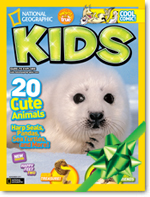
 National Geographic Kids is an excellent mini of National Geographic for the 6 years+ explorers. It has basically the same elements of the grown-up version: photography; awareness and study; plus science and geography. You can start even younger with a mostly animal-focused National Geographic Little Kids. Their website is fun for school-aged kids, too.


Now I want these for myself--how will I wait another year and a half to order them for Baby A? 
Do you subscribe to any children's magazines?

Related Posts Plugin for WordPress, Blogger...